
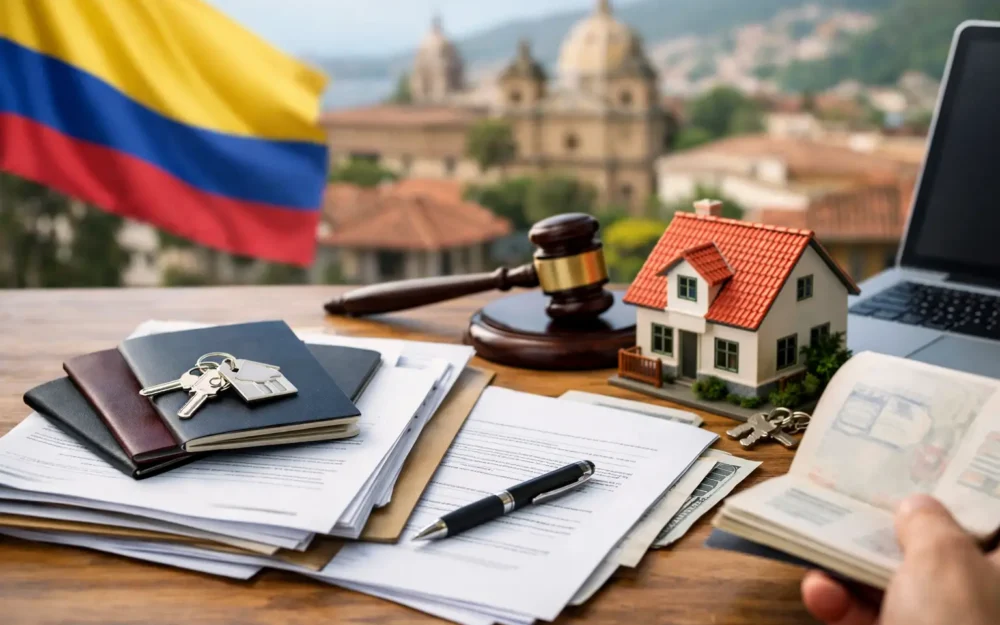
A promising apartment in El Poblado can move quickly. The same is true for a gated home in Envigado or a finca outside Medellin when the price and location line up. For foreign buyers, the difference between securing the property and losing momentum often comes down to paperwork. If you are asking what documents foreign buyers need to purchase real estate in Colombia, the short answer is this: fewer than many expect, but each one has to be handled correctly.
Colombia is generally accessible to international buyers, and foreigners can legally own property. That said, accessibility should not be confused with simplicity. The documents themselves are manageable, but timing, bank compliance, and the source of funds process can create delays if you start too late. Buyers who prepare in advance tend to move faster, negotiate more confidently, and avoid costly closing disruptions.
What documents foreign buyers need before making an offer
At the early stage, the core file is straightforward. Most foreign buyers should expect to provide a valid passport, basic personal identification details, and information related to how the purchase funds will enter Colombia. If the buyer is purchasing through a company rather than as an individual, the required file becomes more extensive.
Your passport is the foundation document. In most transactions, a clear copy of the photo page is required, and in some cases additional pages may be requested depending on the bank, notary, or legal review. The passport should be valid and consistent with all supporting documentation. Small inconsistencies in names, middle initials, or document formatting can create unnecessary friction later at the notary or with the bank handling the currency registration.
You will also usually need your personal details exactly as they should appear on the deed. This sounds minor, but it matters. If your legal name includes multiple surnames, suffixes, or variations used in other countries, the transaction documents should be aligned from the beginning. Correcting a deed draft at the end of the process is possible, but it slows everything down.
The bank and source-of-funds documents that matter most
For many international buyers, the real question is not only what documents foreign buyers need, but which documents actually cause delays. In practice, banking and compliance paperwork are often the most sensitive part of the file.
If you are bringing funds into Colombia for a property purchase, the funds should be transferred through the proper financial channels and declared correctly. This is essential not just for the purchase itself, but also for proving the investment later if you want to repatriate funds or document the investment for immigration or tax planning purposes.
Expect to provide documents that support the origin of funds. Depending on the amount, the receiving bank or intermediary may ask for bank statements, proof of asset sale, business income records, investment account statements, or other evidence showing where the money came from. This is not unique to Colombia. It reflects standard anti-money laundering compliance, but the practical impact is real: if your funds arrive before your documentation is ready, the transfer can be delayed or questioned.
In many cases, foreign exchange declaration paperwork is also part of the process. This is the record that shows the funds entered Colombia for investment purposes. Buyers sometimes underestimate how important this step is. If it is done incorrectly, the purchase may still close, but fixing the record later can be difficult. That matters if you eventually sell and want to move proceeds out of the country with a clear paper trail.
Do you need a Colombian ID or visa?
Usually, no Colombian visa is required simply to buy property. Foreigners can purchase real estate in Colombia without being residents. You also do not need to be a Colombian citizen. That is one reason Medellin continues to attract lifestyle buyers, investors, and second-home purchasers from the US and beyond.
As for a local ID, some buyers obtain a foreigner identification card later if they pursue residency, but it is not typically a prerequisite for the purchase itself. A passport is often sufficient for the transaction. Even so, certain institutions may ask for a local tax identification number or registration for administrative purposes, especially depending on how the funds are processed or how the property will be held. This is where local legal and transactional guidance becomes valuable. The rule is not always the same in every file because bank procedures and transaction structures vary.
If you are buying through a company, the file gets deeper
Some buyers prefer to purchase through a US entity, offshore company, or another corporate vehicle for estate planning, liability, or investment structuring reasons. That can be smart in the right scenario, but it adds documentation.
A company purchase generally requires corporate formation documents, certificates of good standing or equivalent evidence of legal existence, operating agreements or bylaws, and documents showing who has authority to sign on behalf of the company. Identification for beneficial owners and legal representatives is also commonly requested.
If these documents were issued outside Colombia, they may need apostille certification and official translation into Spanish, depending on the institution or notarial requirement. This is one of the clearest examples of why structure should be decided early. Buying personally is often simpler. Buying through an entity may offer strategic benefits, but it involves more preparation and more review.
Documents for signing the deed and closing
As the transaction moves toward closing, the focus shifts from buyer identification to execution. The public deed will be prepared for signature before a notary, and the buyer’s information must match the supporting documents exactly.
If you will be present in Colombia for closing, you typically sign directly with your passport and transaction file already in place. If you will not be present, you may be able to use a power of attorney. This is common for overseas buyers, but the power of attorney has to be drafted carefully, signed properly, and often notarized and apostilled in the country where it is executed. If the document is in English, an official Spanish translation may also be required.
This is a point where timing matters. A power of attorney can be efficient, but not if it is prepared at the last minute. International notarization, apostille processing, and translation can easily affect the closing schedule.
What documents foreign buyers need for due diligence
The buyer’s document file is only one side of the transaction. Smart purchasing in Medellin also means reviewing the seller and property documents thoroughly before funds are fully committed.
On the property side, due diligence often includes reviewing the certificate of title tradition and freedom, the property tax record, the seller’s identity and authority to sell, and any condominium or HOA-related documents if the asset is in a building or gated community. For higher-value properties, development lots, rural homes, or income-producing assets, the review can become more layered.
This is where buyers benefit from working with specialists who know neighborhood-level realities. A luxury apartment in Provenza, a new build in Laureles, and a country property in El Retiro may each present different document risks. The paperwork is not just about legality. It is about whether the asset matches the opportunity it appears to offer.
Common mistakes foreign buyers make with documents
The most common mistake is assuming the property contract is the hard part and the banking paperwork will sort itself out. In reality, banks and compliance teams work on their own timelines, and they are not motivated by your closing deadline.
Another frequent issue is wiring funds without a clear plan for how the transfer will be registered. Buyers also run into problems when names do not match exactly across passports, bank records, and powers of attorney. Corporate buyers sometimes choose an entity structure for tax or asset protection reasons without realizing how much extra documentation that decision creates.
There is also a practical mistake that affluent buyers occasionally make in fast-moving Medellin submarkets: waiting until they find the ideal property before assembling their file. By then, the deal clock is already running.
A practical way to prepare before you start shopping
Before touring seriously or negotiating aggressively, have a clean passport copy ready, confirm how title should be taken, speak with your advisor about the source and transfer of funds, and decide whether you will close in person or through power of attorney. If you are buying through a company, gather the corporate documents first, not after the offer is accepted.
This level of preparation gives you leverage. Sellers and brokers take a buyer more seriously when the process is clearly organized. It also allows your legal and transactional team to catch gaps early, while there is still time to fix them without putting the property at risk.
For foreign buyers entering Medellin’s market, the right documents do more than satisfy a notary or a bank. They put you in position to act decisively when the right apartment, penthouse, finca, or investment property appears. Primavera Realty Medellin regularly sees that the most successful purchases are not always made by the first buyer to inquire, but by the buyer who is fully prepared when it counts.