
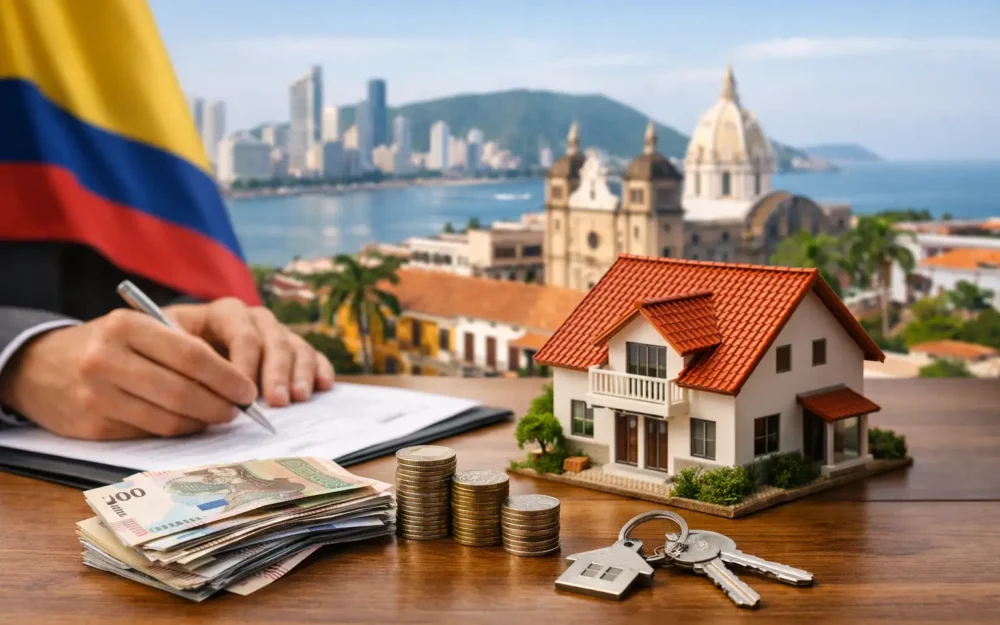
If you are serious about buying in Medellin, financing is usually the first reality check. Many foreign buyers arrive assuming the mortgage process will look like the US, then discover that how to finance Colombia property depends on residency status, source of funds, property type, and how quickly the seller expects to close.
That does not make Colombia difficult. It simply means you need the right strategy before you start negotiating on an apartment in El Poblado, a gated home in Envigado, or a finca in El Retiro. The strongest buyers are the ones who understand early whether they will buy with cash, use financing from their home country, secure a Colombian loan, or work through a developer payment plan.
How to finance Colombia property as a foreign buyer
For most international buyers, there are four realistic paths. The best option depends on your liquidity, tax profile, timeline, and whether you are buying resale or new construction.
Cash remains the simplest route
Cash is still the most common way foreigners buy property in Colombia. Sellers often prefer it because it reduces approval risk and shortens the closing timeline. In a competitive segment, especially for well-priced apartments in Laureles or premium inventory in El Poblado, cash can also strengthen your negotiating position.
That said, cash does not always mean wiring the entire purchase price in one move without planning. You still need to think through how the funds enter Colombia, how the investment is registered when appropriate, and how exchange rates affect your real acquisition cost. A strong purchase can become less attractive if poor currency timing adds several percentage points to the deal.
Financing from your home country can be more practical than a local mortgage
Many buyers do not finance the Colombian property directly at all. Instead, they use a home equity line, refinance a property they already own, borrow against a portfolio, or use private banking facilities in their country of residence.
This route often offers lower rates, more familiar underwriting, and less friction with documentation. It also gives you more flexibility because the Colombian property purchase can be presented to the seller as a cash transaction. For affluent buyers and investors, this is frequently the cleanest structure.
The trade-off is that your Colombian asset is being funded by debt secured elsewhere. That may be perfectly reasonable, but it changes your risk profile. If your income or asset base is in dollars and the property produces peso-based income, you should be clear on how that currency mismatch affects returns.
Colombian bank financing is possible, but not universal
Foreigners can sometimes obtain financing through Colombian banks, but this is where expectations need to be realistic. Loan availability depends heavily on the bank, your residency status, documented income, credit profile, and the type of property you are buying.
In general, residents with Colombian financial history have a much easier path than non-residents. Some banks will consider foreign income, but they may require extensive documentation, official translations, tax returns, bank statements, and proof of legal status in Colombia. Approval can also take time, and not every property fits a bank’s lending criteria.
Even when financing is available, loan-to-value ratios may be lower than what US buyers are used to. You should expect to contribute a meaningful down payment. Interest rates, underwriting standards, and insurance requirements also need careful review, because a loan that looks acceptable at first glance may be less attractive once local costs are added.
Developer payment plans are often overlooked
If you are buying new construction or pre-construction, developer financing can be one of the most useful options. Many projects offer staged payment schedules during construction, with a substantial portion paid over time before final delivery.
This can work well for buyers who prefer to spread capital deployment rather than transfer the full amount upfront. It is especially relevant in newer residential developments around Medellin’s premium corridors and nearby lifestyle markets.
Still, a developer payment plan is not the same as long-term mortgage financing. In many cases, it helps you get to delivery, but you still need a final payment strategy after that. Before committing, make sure you understand exactly when each installment is due and whether final settlement will require cash or a separate loan.
What lenders and sellers will look at
Whether you pursue local financing or simply want your offer taken seriously, documentation matters. Colombian transactions reward buyers who are organized.
Banks and counterparties typically want a clear picture of identity, legal status, income, and source of funds. If you are a salaried professional, that may mean employment letters, pay stubs, and tax returns. If you are self-employed or living on investment income, the file usually requires more explanation and more supporting records.
This is one reason high-net-worth and entrepreneurial buyers should prepare early. Strong liquidity does not automatically translate into easy underwriting if income is structured across companies, trusts, or international accounts. The cleaner your file, the better your options.
The costs buyers often forget to finance
When people ask how to finance Colombia property, they often focus only on purchase price. That is too narrow. You also need to budget for closing costs, legal review, notary expenses, registration fees, and any advisory support you want in place.
If you are buying a resale property, you may also need reserve capital for updates, furnishing, or immediate repairs. If you are buying for rental income, the right way to model the deal includes vacancy assumptions, administration fees, building dues, and tax exposure. Financing the purchase without planning for the post-closing cash needs is a common mistake.
This matters even more in premium markets. A luxury apartment with an attractive entry price can still require substantial setup capital if the goal is high-end furnishing or repositioning the unit for executive rentals.
Currency strategy is part of the financing strategy
For US-based buyers, exchange rate movement can meaningfully change outcomes. If the Colombian peso weakens while you are preparing to buy, your dollar may go further. If it strengthens, your effective cost rises.
That sounds obvious, but many buyers fail to treat foreign exchange as part of deal planning. They focus on the listing price and ignore transfer timing, conversion methods, and the administrative process of moving funds correctly. On larger transactions, those details matter.
A disciplined buyer usually thinks about timing in stages – reservation deposit, contract deposit, and closing balance – rather than approaching the transfer as a last-minute banking task. This is especially true when purchasing higher-value property in Medellin’s top neighborhoods, where a small percentage swing can represent a meaningful amount of money.
Resale versus new construction financing
Resale and pre-construction purchases do not behave the same way, and your financing plan should reflect that.
With resale property, the transaction typically moves faster. Sellers want confidence that you can perform, and financing uncertainty weakens your position. If you need a bank loan, confirm feasibility before making aggressive offers.
With pre-construction, there is usually more time to structure payments. That can help buyers who are liquid but prefer not to commit all capital immediately. It can also help investors align their cash flow with expected project milestones. The trade-off is project risk, delivery timing, and the need to verify the developer’s terms carefully.
When local advice makes the biggest difference
Foreign buyers usually do not lose deals because financing is impossible. They lose deals because they choose the wrong structure for the asset, the neighborhood, or the timing.
A buyer targeting a turnkey apartment in El Poblado for personal use may benefit from speed and simplicity. An investor pursuing below-market value opportunities in Laureles may care more about leverage and renovation reserves. Someone buying a luxury country home near Medellin may need a very different bankability assessment than someone purchasing a standard condo in a central urban zone.
That is why financing should be discussed alongside property selection, not after. A knowledgeable local team can help you understand which listings are more likely to fit a cash buyer, a financed buyer, or a pre-construction payment structure. At Primavera Realty Medellin, that kind of practical alignment is often what turns interest into a successful closing.
A smart financing plan starts before the property search
The best time to solve financing is before you fall in love with a listing. Decide what you are comfortable putting down, how much currency exposure you want, whether you value speed over leverage, and how much paperwork you are willing to manage for a local loan.
Once those answers are clear, the property search gets sharper. You stop wasting time on assets that do not fit your structure and start focusing on the opportunities you can actually close with confidence.
A good Medellin purchase is not only about finding the right apartment, penthouse, finca, or investment unit. It is about matching the right property with the right capital plan so the deal feels as strong on paper as it does in person.