
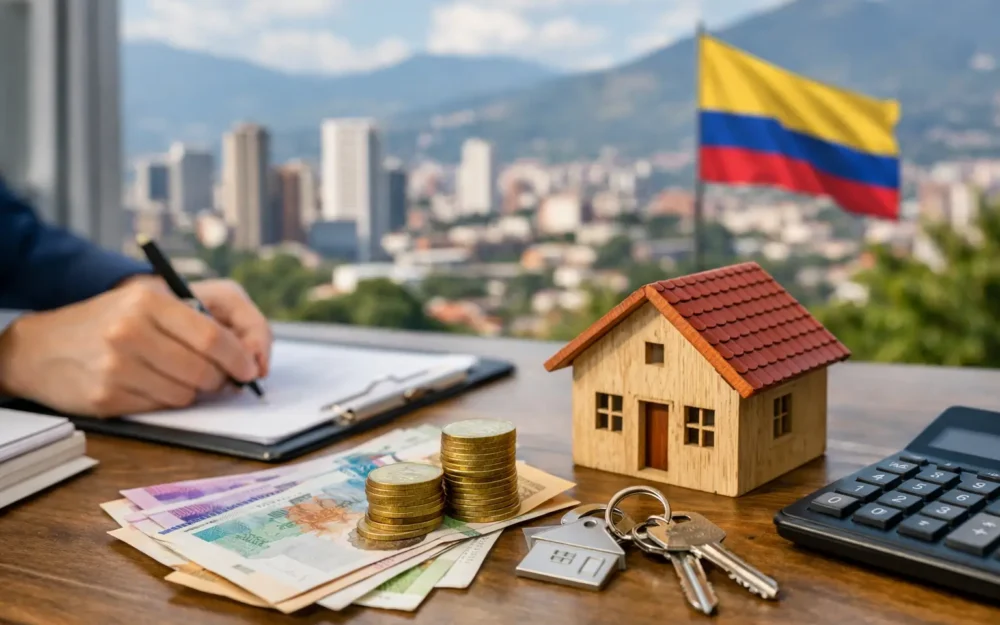
If you are budgeting for a property purchase in Medellin, asking what taxes do buyers pay is not a small detail – it is one of the first numbers that can change your real acquisition cost. Many foreign buyers focus on the purchase price, then get surprised by the additional expenses that appear at closing and after closing. In Colombia, some of these costs are technically taxes, others are fees, and the exact split can vary depending on the property, the municipality, and how the deal is structured.
For buyers coming from the US or other international markets, the first adjustment is this: Colombia does not mirror the same closing-cost logic you may be used to. There is no one-line answer that fits every apartment in El Poblado, every finca in El Retiro, or every investment unit in Laureles. But there is a clear framework, and once you understand it, you can budget with much more confidence.
What taxes do buyers pay at closing?
In Colombia, buyers commonly pay a mix of registration-related charges, notary costs, and other transaction expenses. The term taxes is often used broadly in conversation, but part of what buyers pay is made up of government fees rather than a pure transfer tax in the US sense.
The main costs a buyer should expect are registration fees, notary fees, and occasionally other transactional charges tied to the deed transfer. In many transactions, notary and registration costs are split between buyer and seller, while each party may also handle certain taxes assigned to their side. This is where foreign buyers need precise guidance, because local custom and the written agreement both matter.
A common mistake is assuming the seller covers everything related to title transfer. That is not how many Colombian closings work. Even when a property appears attractively priced, your total acquisition number needs to include the buyer-side portion of deed formalization and registration.
Notary fees
The public deed is formalized through a notary. Notary fees are part of the normal closing process, and they are often shared between buyer and seller. The percentage or final amount depends on the transaction value recorded in the deed and the applicable tariff schedule.
For a foreign buyer, the practical takeaway is simple: do not treat notary costs as minor administrative noise. On higher-value properties, especially luxury apartments or larger homes in premium submarkets, the amount is meaningful enough to include in your early underwriting.
Registration fees
Once the deed is signed, it must be registered with the relevant public registry office. Registration is what formally updates ownership. Buyers typically bear this cost, or at minimum a substantial portion of it, because registration is directly tied to putting title into the buyer’s name.
This is one of the most important buyer-side expenses because without registration, the transfer is not fully perfected. If you are buying for lifestyle use, you need clean title. If you are buying for rental income or long-term appreciation, proper registration is just as critical.
Beneficence and registry-related charges
Depending on the jurisdiction, there may be additional smaller registry or public recording charges associated with the filing process. These are not usually the largest line items, but they still belong in the closing-cost estimate.
This is where local execution matters. Two properties with similar asking prices may not produce identical closing numbers if they sit in different municipalities or involve different deed values and filing calculations.
What taxes do buyers pay after purchase?
Once you own the property, the most relevant recurring tax is the annual property tax, known in Colombia as impuesto predial. This is assessed by the municipality and varies according to the cadastral value, municipal rules, and property classification.
For buyers in Medellin, Envigado, or nearby municipalities, predial can differ meaningfully from one location to another. A luxury apartment in a prime tower may carry a very different annual tax profile than a country home in a gated community outside the city. Newer properties, upgraded units, and high-demand neighborhoods may also create a gap between what looks attractive on the listing and what the long-term holding cost actually feels like.
The key point is that annual property tax is not an afterthought. Investors should model it into net yield. Lifestyle buyers should treat it as part of the annual carrying cost, alongside administration fees, utilities, insurance considerations, and maintenance.
Property tax is based on more than market price
One point that often confuses overseas buyers is that annual property tax is not always a simple percentage of what you paid. In Colombia, municipal assessments and cadastral values play an important role. Sometimes the tax basis is below current market value. In other cases, reassessments can narrow that gap over time.
That creates a useful opportunity and a risk. A property may look efficient from a tax standpoint today, but if the area is seeing appreciation, infrastructure improvements, or broader municipal updates, future assessments may change. That is especially relevant in neighborhoods and municipalities where buyer demand has been climbing.
Costs that buyers confuse with taxes
When people ask what taxes do buyers pay, they are often really asking about total closing costs. That broader number may include items that are not taxes at all.
If you are financing, there may be bank-related costs. If documents need translation, apostille, or special authentication, those are separate service expenses. If you use a legal advisor for due diligence, contract review, title checks, or foreign-buyer structuring, those professional fees are also separate from taxes. They matter just as much to your budget, but they should not be confused with government-imposed charges.
There can also be administrative fees from the building or condominium association if seller documents, account statements, or clearance certificates are required before closing. Again, not taxes, but very real transaction costs.
How this works for foreign buyers in Medellin
Foreign buyers should approach Colombian closing costs with two priorities: clarity and documentation. You want to know not just the approximate amount, but who pays what under the purchase agreement and when each item becomes due.
That matters even more in Medellin’s premium and investment-focused markets. A turnkey apartment in El Poblado, a value-buy unit in Laureles, and a high-end country property in El Retiro may all involve the same legal framework, but the actual numbers can vary based on value, municipality, and the specifics of the transaction.
It also matters if the property is new construction versus resale. New projects can involve a different cost structure, timing schedule, and tax treatment on certain components. Resale transactions are usually more straightforward, but due diligence becomes even more important because you want to confirm outstanding taxes, utilities, administration fees, and any recorded issues before funds are released.
What taxes do buyers pay versus sellers?
This is where international buyers should be careful not to rely on assumptions from their home country. In Colombia, sellers often pay capital gains-related obligations if applicable, plus certain withholding or seller-side taxes connected to the transfer. Buyers, on the other hand, are typically more exposed to registration and ownership formalization costs.
But the phrase typically is doing a lot of work here. Purchase agreements can allocate costs with some flexibility, and transaction practice may vary. In a competitive negotiation, a buyer may ask for a different split. In a premium listing with strong demand, the seller may refuse to move. The market context matters.
This is why a serious buyer should ask for a written net-sheet style estimate before signing. That estimate should separate purchase price, buyer closing costs, annual taxes, and any one-time legal or administrative charges. Once those numbers are clean, it becomes much easier to compare properties on a true cost basis instead of just headline price.
A practical budgeting range
As a working rule, buyers should expect to pay additional closing costs on top of the agreed purchase price, even when the exact line items still need confirmation. The percentage can vary, and luxury purchases make even small percentage differences matter.
For that reason, experienced advisors usually encourage foreign buyers to keep a cushion rather than budget down to the dollar. If your target is a premium apartment or income-producing asset, a tight budget can create unnecessary pressure at exactly the moment when you should be focused on title quality, building strength, neighborhood fit, and resale potential.
At Primavera Realty Medellin, this is one of the areas where clear local guidance protects buyers from making rushed assumptions. The right property is not just the one with the best listing price. It is the one that still makes sense after closing costs, annual taxes, and ownership realities are fully on the table.
If you are evaluating Medellin real estate from abroad, the smartest move is to treat taxes and closing expenses as part of the investment itself. When the numbers are clear from the start, you buy with more control, negotiate with more confidence, and hold the property with fewer surprises.